Today, the world is facing a situation where many crises are happening at the same time, are interlinked and complex. Climate change, health crises (e.g. pandemics), economic instability and geopolitical tensions affect each other and society at multiple levels. Internationalisation opens opportunities to bring new knowledge-based solutions, expertise and experience to Tallinn, which are crucial for the city’s development.
Competence
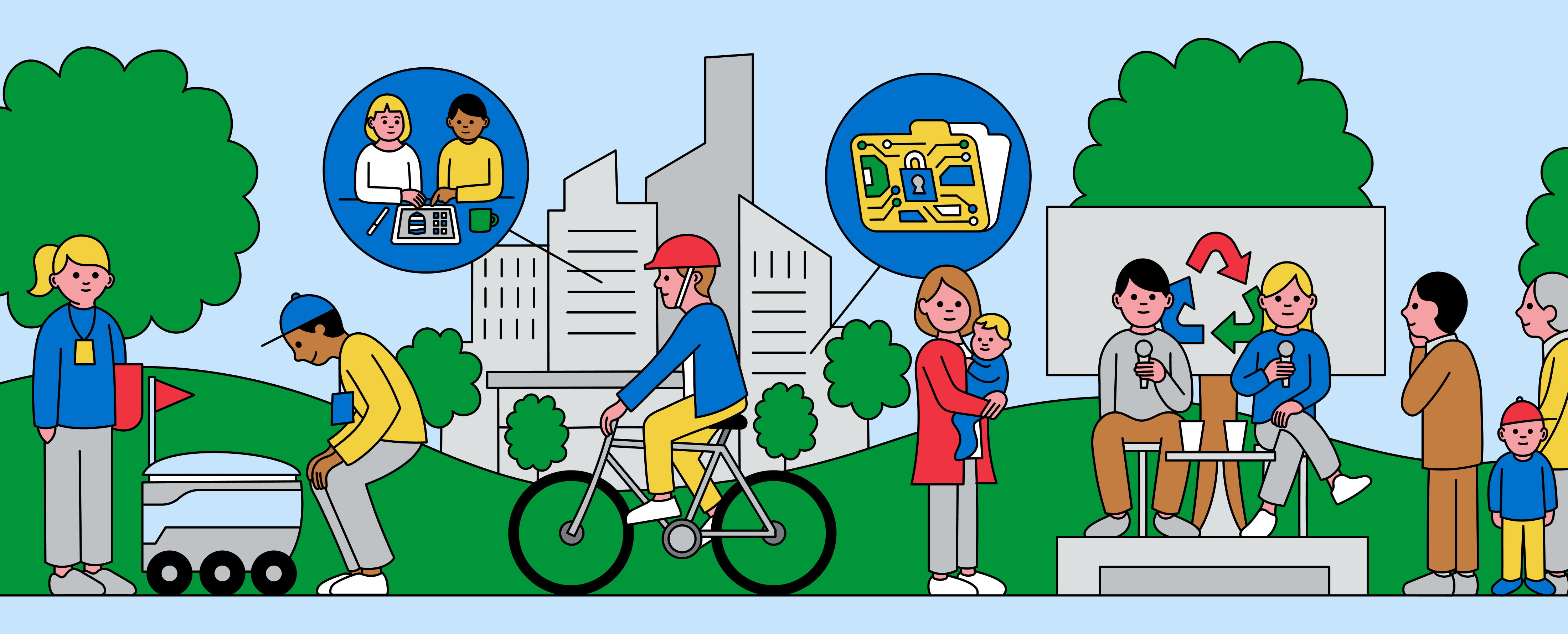

Bringing new knowledge and skills to the city organisation through internationalisation
Through collaborative projects and international networking, Tallinn will learn from good practice, test new technologies and solutions that will contribute to urban planning, the green transition and digital innovation agenda, and the development of other areas of urban activity, enabling more modern and responsive solutions and services for citizens.
Participating in international cooperation creates a motivating environment for the development of teams and staff, as it helps the city as an employer to develop the expertise and skills of its employees, providing them with motivating development opportunities, the chance to network with colleagues from other cities and to broaden their horizons.
Activities
Participation in thematic networks
To acquire the knowledge and skills needed to develop in their respective fields, Tallinn’s public authorities are actively involved in thematic networks on strategic topics that add value to the city, such as urban planning, mobility, personal city development, innovation in public services, green innovation, cultural heritage, creative industries and the use of artificial intelligence.
Participation in international events, conferences and seminars
The city encourages and supports its staff to participate in international events to showcase Tallinn’s experience, gain new knowledge and build direct links with colleagues from other cities.
Initiating joint pilot projects with other cities
Tallinn will initiate and participate in joint pilot projects with other cities. This allows city staff to learn, bring new ideas to the city and test innovative solutions and technologies.
Developing modern governance practices through the Tallinn Sustainability Governance Hub
The Hub will work with international experts to implement practical solutions tailored to Tallinn that support the achievement of the Sustainable Development Goals (SDGs), initiate twinning projects related to sustainability management, and organise training and seminars to learn from international experiences and develop staff knowledge and skills in implementing sustainability principles.
Developing the capacity and competences of the city organisation to engage in international cooperation
Developing international communication skills strengthens the city’s position in the international arena, promotes knowledge exchange and broadens the horizons of employees, making them more effective and capable in their work.
To be successful in international cooperation, city staff should have international cooperation skills. For example, they need to be familiar with protocol and international practices, be able to lead international teams, have a very good command of foreign languages and have the courage and ability to make public presentations. Staff with such skills will reinforce Tallinn’s image as a reliable, professional and valued partner.
If the city’s employees are competent in international relations, they will be able to represent Tallinn’s interests more effectively, participate in international networks and bring new ideas and solutions to the city’s development, which in turn will contribute to the realisation of Tallinn’s development goals.
Therefore, Tallinn is systematically working to develop the international communication skills and experience of its staff, as in a globalising world and as a member of the European Union, international cooperation and communication is critical for the successful development of the city.
Activities
Staff training to develop international communication and cooperation skills
Tallinn systematically runs centralised training to develop staff’s international communication and cooperation skills. Training covers topics such as chairing international meetings, negotiation, public speaking and protocol. Participation in international seminars and training courses is also supported, providing experience in international communication.
Increasing the capacity of Tallinn’s city organisation to participate in international projects
In order to increase the effectiveness of participation in international projects, it is important to develop the capacity of the city’s agencies and institutions, including the District Administrations, to apply for EU and other funding. To this end, the City Diplomacy and Communications Department of the Strategic Management Office, in cooperation with the city’s Human Resources Department, organises regular training sessions, which include EU funding programmes, project management, drafting calls for proposals and language training to improve international communication. Practical workshops will also be organised to share experiences and learn how to successfully prepare project proposals.
The city will also set up a rotation programme to give staff the opportunity to participate in international projects and gain project management experience. It will also support the expansion of the network of contacts by encouraging city staff to participate in international networks and conferences to learn about EU and other funding opportunities, establish new contacts and initiate joint projects with other cities.
Providing regular EU policy briefings to the city’s management
Regular policy briefings will be organised in cooperation with the city authorities, EU and national institutions to ensure that the city’s leadership is aware of EU policies affecting Tallinn’s development. The reviews are essential to support the strategic decision-making process by enabling the city’s leadership to keep abreast of EU decisions that may have an impact on the city’s development, functioning and long-term planning.
Strengthening the liaison network of international cooperation
The liaison network connects international relations staff from the city agencies and institutions. The network helps to enhance information exchange, coordinate the city’s internationalisation activities and ensure a coherent approach to the city’s international relations.
Designing uniform city protocol rules
Tallinn formulates a set of common rules of protocol to be used when welcoming and interacting with external guests, as well as for the city’s own ceremonies, representative events and receptions, ensuring a consistent and professional approach.
Competence
Today, the world is facing a situation where many crises are happening at the same time, are interlinked and complex. Climate change, health crises (e.g. pandemics), economic instability and geopolitical tensions affect each other and society at multiple levels. Internationalisation opens opportunities to bring new knowledge-based solutions, expertise and experience to Tallinn, which are crucial for the city’s development.

Bringing new knowledge and skills to the city organisation through internationalisation
Through collaborative projects and international networking, Tallinn will learn from good practice, test new technologies and solutions that will contribute to urban planning, the green transition and digital innovation agenda, and the development of other areas of urban activity, enabling more modern and responsive solutions and services for citizens.
Participating in international cooperation creates a motivating environment for the development of teams and staff, as it helps the city as an employer to develop the expertise and skills of its employees, providing them with motivating development opportunities, the chance to network with colleagues from other cities and to broaden their horizons.
Activities
Participation in thematic networks
To acquire the knowledge and skills needed to develop in their respective fields, Tallinn’s public authorities are actively involved in thematic networks on strategic topics that add value to the city, such as urban planning, mobility, personal city development, innovation in public services, green innovation, cultural heritage, creative industries and the use of artificial intelligence.
Participation in international events, conferences and seminars
The city encourages and supports its staff to participate in international events to showcase Tallinn’s experience, gain new knowledge and build direct links with colleagues from other cities.
Initiating joint pilot projects with other cities
Tallinn will initiate and participate in joint pilot projects with other cities. This allows city staff to learn, bring new ideas to the city and test innovative solutions and technologies.
Developing modern governance practices through the Tallinn Sustainability Governance Hub
The Hub will work with international experts to implement practical solutions tailored to Tallinn that support the achievement of the Sustainable Development Goals (SDGs), initiate twinning projects related to sustainability management, and organise training and seminars to learn from international experiences and develop staff knowledge and skills in implementing sustainability principles.
Developing the capacity and competences of the city organisation to engage in international cooperation
Developing international communication skills strengthens the city’s position in the international arena, promotes knowledge exchange and broadens the horizons of employees, making them more effective and capable in their work.
To be successful in international cooperation, city staff should have international cooperation skills. For example, they need to be familiar with protocol and international practices, be able to lead international teams, have a very good command of foreign languages and have the courage and ability to make public presentations. Staff with such skills will reinforce Tallinn’s image as a reliable, professional and valued partner.
If the city’s employees are competent in international relations, they will be able to represent Tallinn’s interests more effectively, participate in international networks and bring new ideas and solutions to the city’s development, which in turn will contribute to the realisation of Tallinn’s development goals.
Therefore, Tallinn is systematically working to develop the international communication skills and experience of its staff, as in a globalising world and as a member of the European Union, international cooperation and communication is critical for the successful development of the city.
Activities
Staff training to develop international communication and cooperation skills
Tallinn systematically runs centralised training to develop staff’s international communication and cooperation skills. Training covers topics such as chairing international meetings, negotiation, public speaking and protocol. Participation in international seminars and training courses is also supported, providing experience in international communication.
Increasing the capacity of Tallinn’s city organisation to participate in international projects
In order to increase the effectiveness of participation in international projects, it is important to develop the capacity of the city’s agencies and institutions, including the District Administrations, to apply for EU and other funding. To this end, the City Diplomacy and Communications Department of the Strategic Management Office, in cooperation with the city’s Human Resources Department, organises regular training sessions, which include EU funding programmes, project management, drafting calls for proposals and language training to improve international communication. Practical workshops will also be organised to share experiences and learn how to successfully prepare project proposals.
The city will also set up a rotation programme to give staff the opportunity to participate in international projects and gain project management experience. It will also support the expansion of the network of contacts by encouraging city staff to participate in international networks and conferences to learn about EU and other funding opportunities, establish new contacts and initiate joint projects with other cities.
Providing regular EU policy briefings to the city’s management
Regular policy briefings will be organised in cooperation with the city authorities, EU and national institutions to ensure that the city’s leadership is aware of EU policies affecting Tallinn’s development. The reviews are essential to support the strategic decision-making process by enabling the city’s leadership to keep abreast of EU decisions that may have an impact on the city’s development, functioning and long-term planning.
Strengthening the liaison network of international cooperation
The liaison network connects international relations staff from the city agencies and institutions. The network helps to enhance information exchange, coordinate the city’s internationalisation activities and ensure a coherent approach to the city’s international relations.
Designing uniform city protocol rules
Tallinn formulates a set of common rules of protocol to be used when welcoming and interacting with external guests, as well as for the city’s own ceremonies, representative events and receptions, ensuring a consistent and professional approach.
Competence
Published
Author
Today, the world is facing a situation where many crises are happening at the same time, are interlinked and complex. Climate change, health crises (e.g. pandemics), economic instability and geopolitical tensions affect each other and society at multiple levels. Internationalisation opens opportunities to bring new knowledge-based solutions, expertise and experience to Tallinn, which are crucial for the city’s development.

Published
Author
Bringing new knowledge and skills to the city organisation through internationalisation
Through collaborative projects and international networking, Tallinn will learn from good practice, test new technologies and solutions that will contribute to urban planning, the green transition and digital innovation agenda, and the development of other areas of urban activity, enabling more modern and responsive solutions and services for citizens.
Participating in international cooperation creates a motivating environment for the development of teams and staff, as it helps the city as an employer to develop the expertise and skills of its employees, providing them with motivating development opportunities, the chance to network with colleagues from other cities and to broaden their horizons.
Activities
Participation in thematic networks
To acquire the knowledge and skills needed to develop in their respective fields, Tallinn’s public authorities are actively involved in thematic networks on strategic topics that add value to the city, such as urban planning, mobility, personal city development, innovation in public services, green innovation, cultural heritage, creative industries and the use of artificial intelligence.
Participation in international events, conferences and seminars
The city encourages and supports its staff to participate in international events to showcase Tallinn’s experience, gain new knowledge and build direct links with colleagues from other cities.
Initiating joint pilot projects with other cities
Tallinn will initiate and participate in joint pilot projects with other cities. This allows city staff to learn, bring new ideas to the city and test innovative solutions and technologies.
Developing modern governance practices through the Tallinn Sustainability Governance Hub
The Hub will work with international experts to implement practical solutions tailored to Tallinn that support the achievement of the Sustainable Development Goals (SDGs), initiate twinning projects related to sustainability management, and organise training and seminars to learn from international experiences and develop staff knowledge and skills in implementing sustainability principles.
Developing the capacity and competences of the city organisation to engage in international cooperation
Developing international communication skills strengthens the city’s position in the international arena, promotes knowledge exchange and broadens the horizons of employees, making them more effective and capable in their work.
To be successful in international cooperation, city staff should have international cooperation skills. For example, they need to be familiar with protocol and international practices, be able to lead international teams, have a very good command of foreign languages and have the courage and ability to make public presentations. Staff with such skills will reinforce Tallinn’s image as a reliable, professional and valued partner.
If the city’s employees are competent in international relations, they will be able to represent Tallinn’s interests more effectively, participate in international networks and bring new ideas and solutions to the city’s development, which in turn will contribute to the realisation of Tallinn’s development goals.
Therefore, Tallinn is systematically working to develop the international communication skills and experience of its staff, as in a globalising world and as a member of the European Union, international cooperation and communication is critical for the successful development of the city.
Activities
Staff training to develop international communication and cooperation skills
Tallinn systematically runs centralised training to develop staff’s international communication and cooperation skills. Training covers topics such as chairing international meetings, negotiation, public speaking and protocol. Participation in international seminars and training courses is also supported, providing experience in international communication.
Increasing the capacity of Tallinn’s city organisation to participate in international projects
In order to increase the effectiveness of participation in international projects, it is important to develop the capacity of the city’s agencies and institutions, including the District Administrations, to apply for EU and other funding. To this end, the City Diplomacy and Communications Department of the Strategic Management Office, in cooperation with the city’s Human Resources Department, organises regular training sessions, which include EU funding programmes, project management, drafting calls for proposals and language training to improve international communication. Practical workshops will also be organised to share experiences and learn how to successfully prepare project proposals.
The city will also set up a rotation programme to give staff the opportunity to participate in international projects and gain project management experience. It will also support the expansion of the network of contacts by encouraging city staff to participate in international networks and conferences to learn about EU and other funding opportunities, establish new contacts and initiate joint projects with other cities.
Providing regular EU policy briefings to the city’s management
Regular policy briefings will be organised in cooperation with the city authorities, EU and national institutions to ensure that the city’s leadership is aware of EU policies affecting Tallinn’s development. The reviews are essential to support the strategic decision-making process by enabling the city’s leadership to keep abreast of EU decisions that may have an impact on the city’s development, functioning and long-term planning.
Strengthening the liaison network of international cooperation
The liaison network connects international relations staff from the city agencies and institutions. The network helps to enhance information exchange, coordinate the city’s internationalisation activities and ensure a coherent approach to the city’s international relations.
Designing uniform city protocol rules
Tallinn formulates a set of common rules of protocol to be used when welcoming and interacting with external guests, as well as for the city’s own ceremonies, representative events and receptions, ensuring a consistent and professional approach.